
From private residence to public building

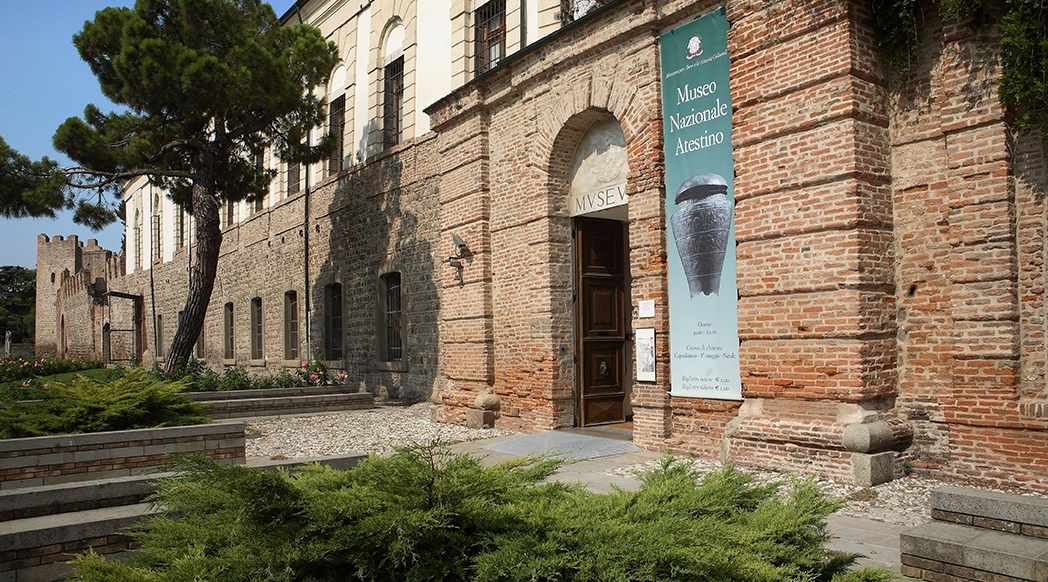
In 1565, the Republic of Venice ceded the castle and walls of Este to the prominent Venetian Mocenigo family, which built its holiday residence here. The project involved the construction of two symmetrical “L-shaped” buildings that incorporated a section of the 14th-century walls into the main facades. The two buildings were joined by a central body, which was demolished before the 17th century.

Before 1788, the southeast arm of the building was destroyed by fire. Girolamo Franchini’s Veduta di Este (1775) is the last image of the building intact, while Antonio Varani’s Pianta Geometrica di Este (1788) shows the right wing entirely destroyed. In 1821, the palace and castle were purchased by Moisé Trieste. After his death, his sons put the palace to agricultural use with some rooms used as storage for agricultural products from the Trieste lands and leaned a low building for kitchen use. In the second half of the 19th century the complex was inherited by the Da Zara brothers.

In 1883, the Carrarese Castle and the Mocenigo Palace were purchased by the City of Este. The palace was intended to house the Euganean Roman Museum and, therefore, was adapted to become a building open to the public. In 1890, the municipality donated the south wing of the palace and the museum collections to the state. The rooms were restored to their original state by demolishing the factories used as kitchens built by the Trieste. The Atestino National Museum was inaugurated on July 6, 1902.
Between 1893 and 1896, the north side of the palace was heavily transformed to adapt it for use as elementary schools. In the 1870s, the schools were moved elsewhere, and the northern wing was acquired by the museum, which in later years built warehouses and office space there.

History of the palace

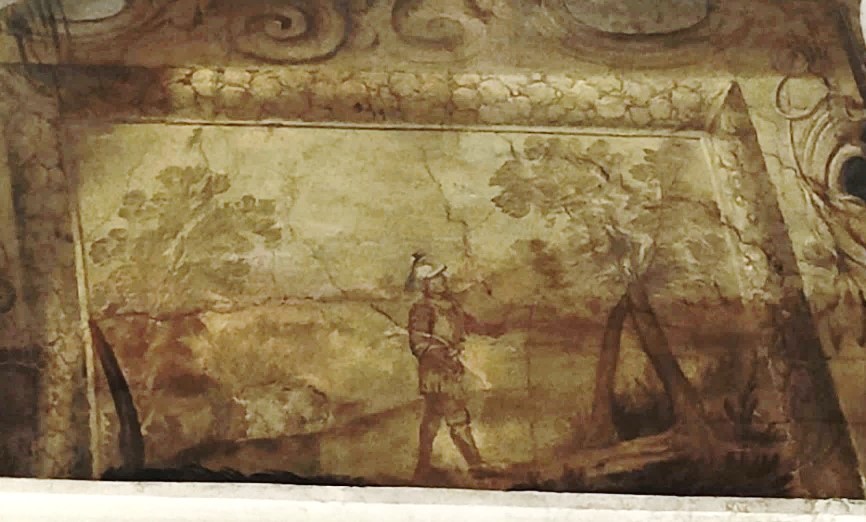
The frescoes in the rooms on the second floor of the museum have been affected by the many changes in the use of the rooms, and only some of the vaulted ceilings retain their integrity. The frescoes have long been attributed to the Venetian painter Giulio Carpioni (1613- 1678), but recent studies hypothesize attribution to Pietro Antonio Torri, a Bolognese painter active in the Veneto region between 1658 and 1774. From a plan drawn up in 1801 and preserved in the Biblioteca Civica di Padova, it has been deduced that the main entrance was in the castle gardens and that the use of the spaces on the piano nobile was opposite to that of today.

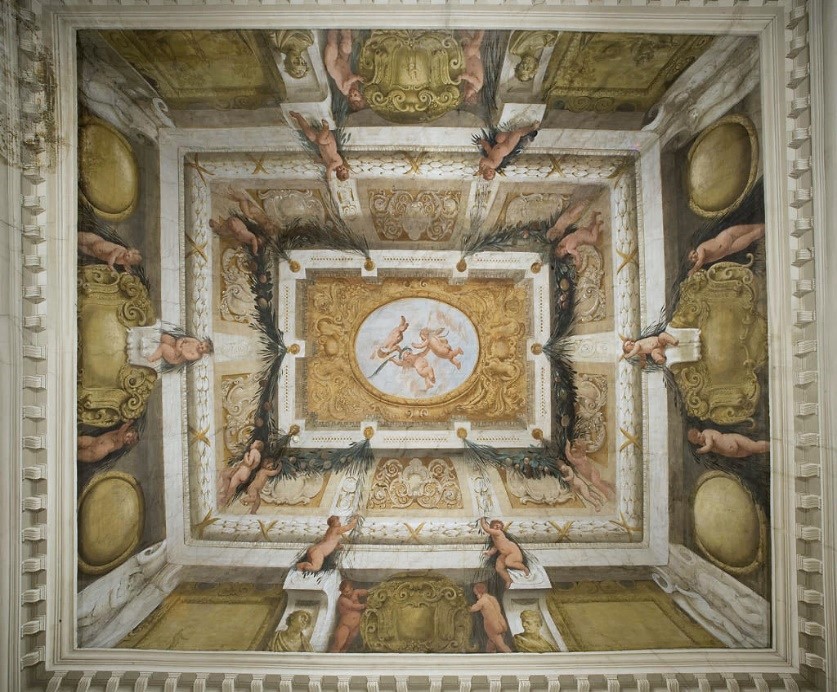
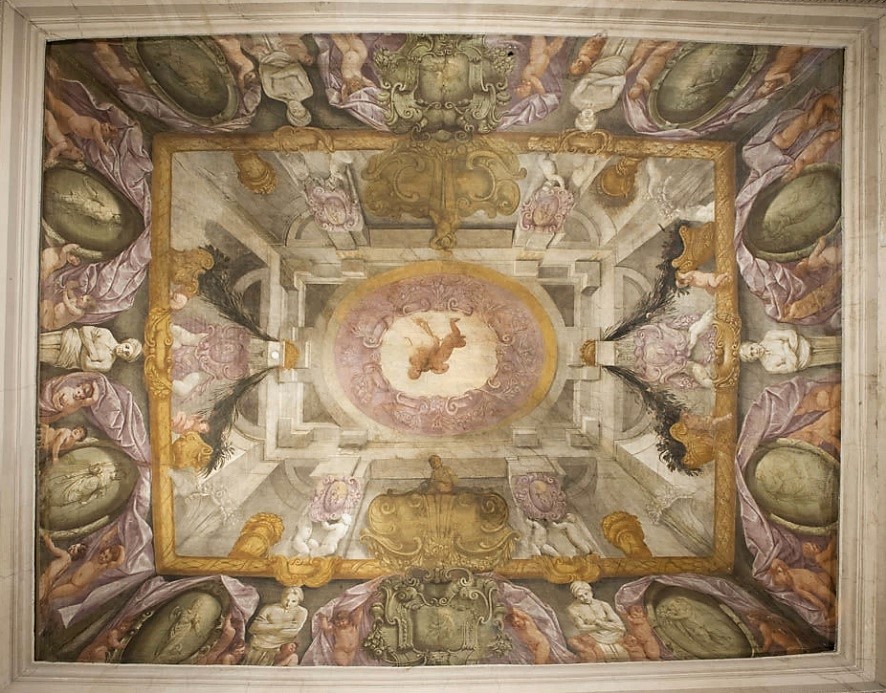
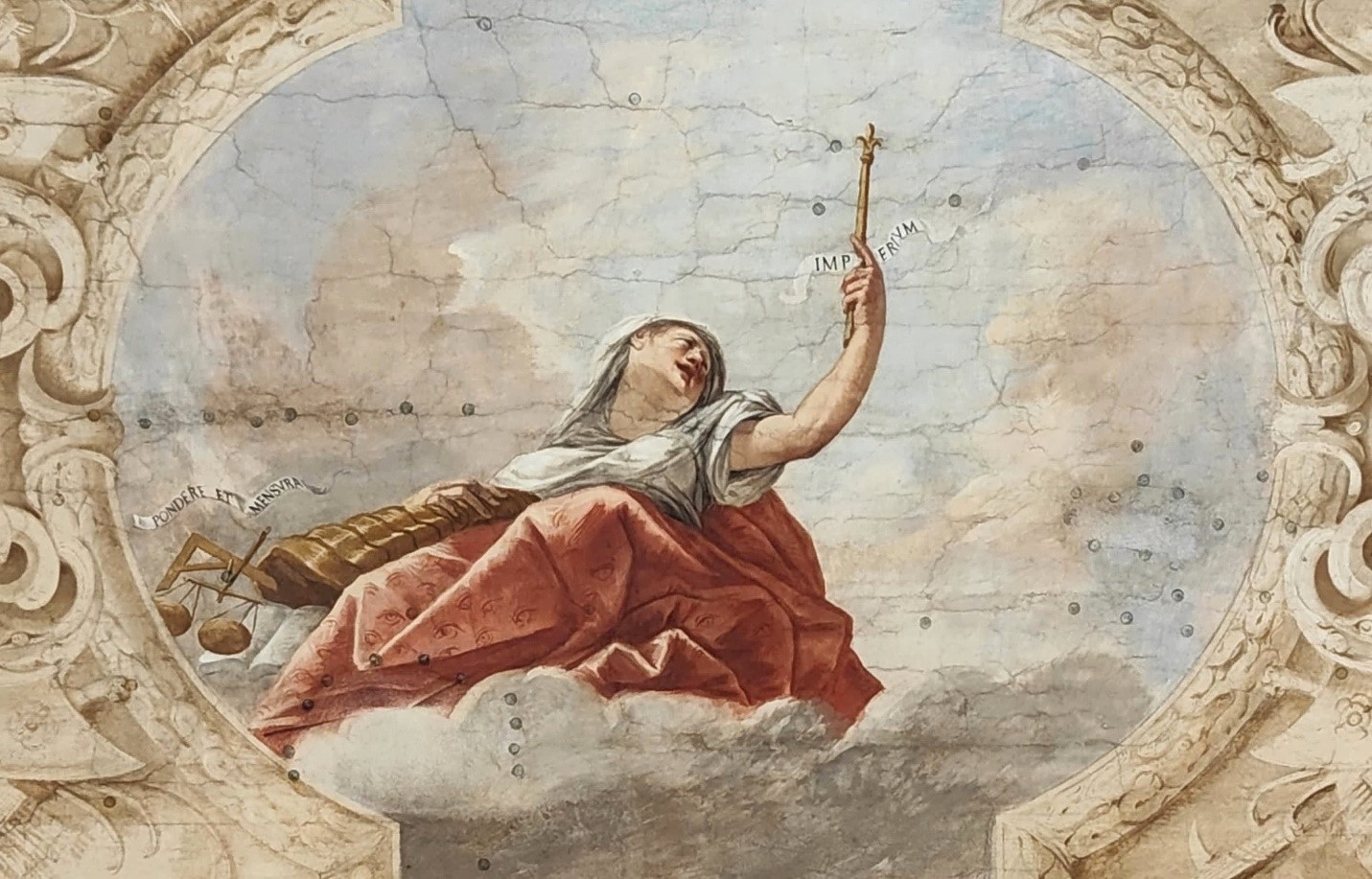
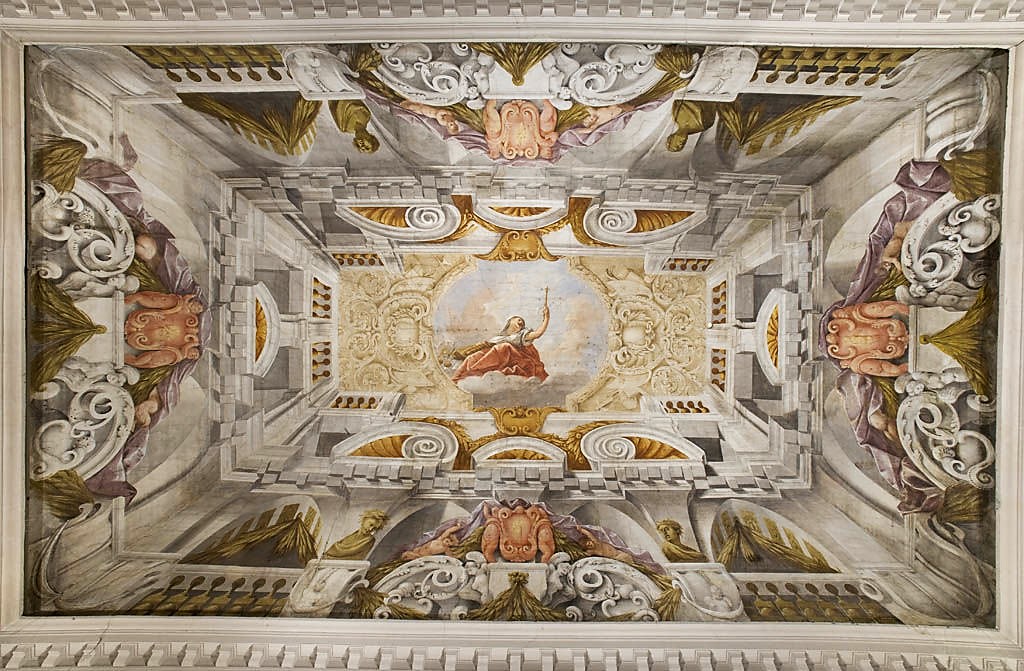
The first room was the present Room 5, which had rich wall decoration and a fireplace between the windows. Within a painted architectural framework hung mock fresco paintings with mythological representations. The walls were covered with plaster at an unspecified time, and the existence of this fresco cycle was unknown until the early 21st century. In Room 4, the ceiling is decorated with a mock architectural quadrature with mock statues of putti and stone volutes at the corners. The panels in the first register depict scenes from Torquato Tasso’s Gerusalemme Liberata (1581). An oval with three winged cupids opens in the center of the vault. Room 2 was the main hall of the mansion and has a ceiling decorated with a mock architectural framework with the Mocenigo family coat of arms in the center and on the vault an open slash to the sky with a female figure seated on clouds with scroll, cornucopia, scales and square in her hands to represent the power of the Mocenigo family. The vault of Room 1 also has architectural decoration with mock panels and statues of mythological figures. In the center, there is an oval with two putti flying toward the sky.
Museum route

How clear is the information on this page?

Thank you, your feedback will help us improve the service!

What were your favorite aspects? 1/2

Where did you encounter the greatest difficulties? 1/2

Do you want to add more details? 2/2

Enter a maximum of 200 characters
This site is registered on wpml.org as a development site. Switch to a production site key to remove this banner.