
The History of the Museo Nazionale Atestino
The first reports of discoveries of ancient objects in the Este area are found in some antiquarian works from the 15th and 16th centuries. Important were the antiquarian collections of the 17th and 18th centuries by Giorgio Contarini, Isidoro Alessi, and Marquis Tommaso Obizzi (the latter were later taken to Vienna).
The 19th Century
1834: La prima raccolta pubblica a Este fu istituita da Vincenzo Fracanzani: si trattava del Museo Civico Lapidario, con sede nell’oratorio di Santa Maria dei Battuti, all’interno del grande convento di San Francesco. The first nucleus of the museum consisted of the collection of inscribed monuments and epigraphs by the local scholar Isidoro Alessi, to which the Contarini collection was added, donated by the new owner of Vigna Contarena in Via dei Cappuccini. The museum’s custody was entrusted to Eugenio Gasparini and the catalog of the 89 pieces was compiled by Giuseppe Furlanetto.
1874: A young professor, Alessandro Prosdocimi, was appointed director of the museum.
1876: Si scoprirono casualmente, in un podere di proprietà del conte Boldù Dolfin a Canevedo, sette tombe. Two of them contained rich grave goods and beautiful bronze situlae decorated in relief. This discovery confirmed to Prosdocimi the existence of an important civilization in Este, which he initially defined as Euganean, on which he promptly published a series of studies.
1877 – 1880: Prosdocimi conducted systematic excavation campaigns in the pre-Roman necropolis areas he identified around the city; in 1879 the Benvenuti brothers discovered in the garden of their villa the famous decorated situla, which they donated to the museum along with all the artifacts resulting from the excavations.
1880: The museum was named Museo Euganeo Romano; Alfonso Alfonsi was appointed vice-curator.
1883: The Municipality of Este purchased the Castle and the Mocenigo Palace, intended as a new museum site.
1885: The city council officially requested the nationalization of the museum.
1887: The Royal Decree establishing the Museo Nazionale Atestino was issued, with Alessandro Prosdocimi appointed as director.
1888: An agreement was signed whereby the Municipality transferred the civic collections to the State in perpetual deposit, designating the Mocenigo Palace as the museum’s permanent site. The ambitious project to adapt the ancient building also included the addition of a new section intended to house the atrium and the new staircase leading to the upper floors.
From 1900 to Today
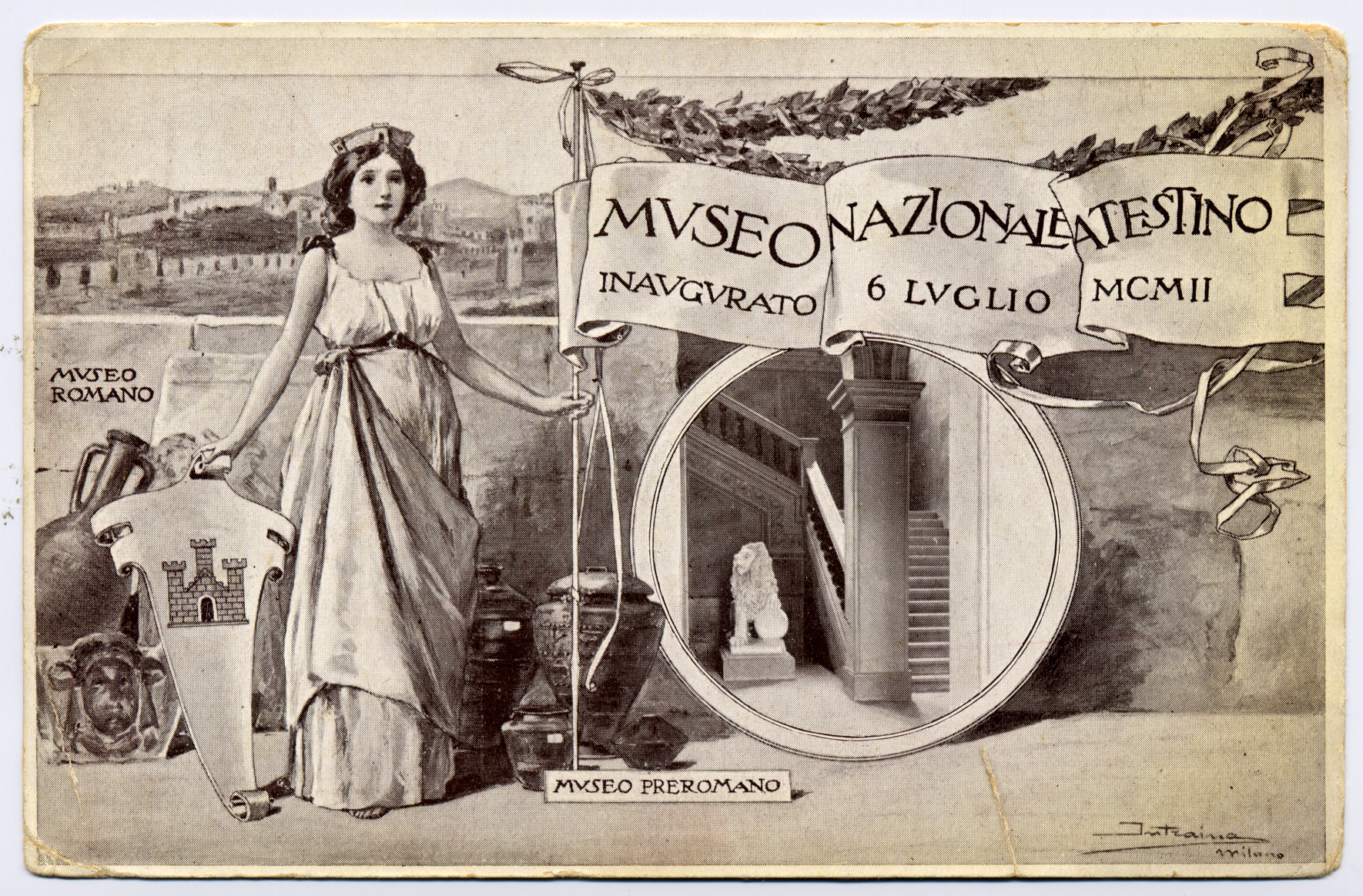
1902: Il museo venne inaugurato nella nuova sede di Palazzo Mocenigo il 6 luglio. The scientific plan of the new exhibition was drafted by Prosdocimi with Gherardo Ghirardini: it was based on respecting the topographical arrangement and maintaining the original distinctions of the grave goods.
1911: Alla morte di Prosdocimi, la reggenza della direzione fu affidata ad Alfonso Alfonsi, che venne nominato direttore solo nel 1921. Alfonsi, until his death in 1922, oversaw a large number of excavations throughout the territory of the Superintendency.
1922: Superintendent Gino Fogolari appointed Adolfo Callegari as director, then honorary inspector of monuments; under his direction, the well-known golden medallion of Augustus and ceramic materials from the 16th and 17th centuries found in the Abbey of Santa Maria di Carceri were acquired, and reorganization works were carried out, interrupted by wartime needs.
1948: After Callegari’s death, Giulia Fogolari became the new director; from 1965 the work in the museum focused on restoration and cataloging, thanks also to collaboration with the Institute of Archaeology of the University of Padua.
1968: The State purchased from the Municipality of Este the north wing occupied by elementary schools, which were completely converted into deposits for archaeological material.
1984: After five years of closure due to the need for radical restructuring work, the museum was reopened to the public with a completely renewed exhibition. This is the last comprehensive intervention before the works of 2025.
1998: Inauguration of the Sala delle Colonne as a space for temporary exhibitions and conferences.